
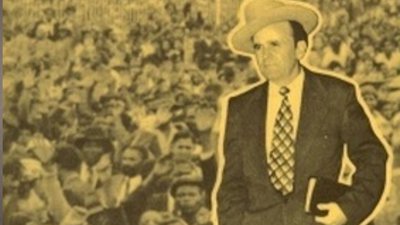
Michael David Pfaff
Michael David Pfaff was a young medical intern at Addington Hospital in Durban, South Africa, whose terminal leukemia became one of the clearest documented examples of William Branham's fraudulent healing claims. During Branham and F. F. Bosworth's South African revival, Branham publicly singled Pfaff out and declared him cured of "cancer of the blood," prompting Pfaff to leave the hospital against medical advice even though doctors found no improvement in his condition. Waymon Doyne Miller later documented that Pfaff died less than a month after the pronouncement, yet Bosworth still promoted the alleged healing in American Pentecostal publications after Pfaff's death, falsely claiming that hospital staff had found his blood free of cancer. Pfaff's case exposes how Branham's campaign machinery turned failed healings into revival propaganda, even when medical evidence and death records directly contradicted the miracle story.
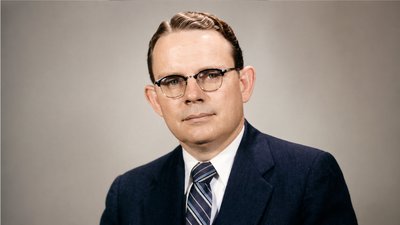
Waymon Doyne Miller
Waymon Doyne Miller was one of the investigators who challenged William Branham's healing-revival claims, corroborating concerns raised by Alfred Pohl, Donny Morton's family, and others who found Branham's reported miracles unreliable or exaggerated. After attending Branham's Johannesburg meetings, Miller worked with ministers and medical contacts to examine alleged healings and later published their findings in Modern Divine Healing, documenting cases in which supposedly healed individuals were never truly bedridden, showed no medical improvement, worsened after the meetings, or died shortly after being proclaimed cured. The report described false press claims, inflated crowd estimates, misleading promotional accounts by F. F. Bosworth, and a pattern of emotional spectacle replacing verifiable healing, making Miller's testimony an important early critique of Branham's ministry and its use of unverifiable or fraudulent miracle claims to build revival credibility.
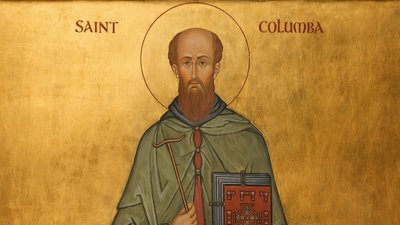
The Thyatira Mistake: Columba, Chronology, and Branham’s False Revelation
William Branham claimed divine revelation for his church age system, yet his chronology and structure closely mirror the earlier dispensational charts of Clarence Larkin. The assignment of St. Columba as the Thyatira church age messenger collapses under historical scrutiny, as Columba died before the age supposedly began and is known primarily through later hagiographical legend rather than doctrinal leadership.
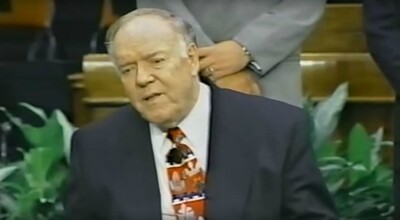
Kenneth Hagin
Kenneth Hagin, brother of mafia hitman George "Dub" Hagin, was a Pentecostal preacher who played a pivotal role in shaping modern charismatic Christianity into what it is today. Hagin is sometimes mistakenly credited as being the father of The Word of Faith Movement, which is sometimes referred to as the "Name It and Claim It Gospel".[1] One of the core teachings of the movement is that humans are "gods" that are lesser than the Almighty God Yahweh.[2] Hagin also supported Branham's position against interracial marriage, suggesting that he aligned with the Christian Identity doctrine.
The Miracle That Wasn’t: The Truth About Donny Morton and William Branham
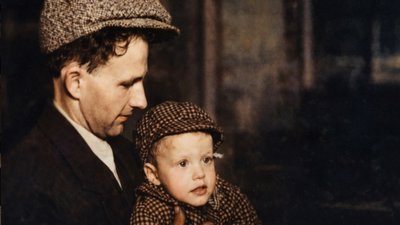
The story of Donny Morton is often repeated as one of William Branham’s greatest healing miracles, yet contemporary newspapers and medical reports tell a very different story. Donny was never healed and died from the same illness for which prayer was sought, exposing how selective storytelling transformed documented tragedy into a lasting miracle myth.
William Branham's Wig
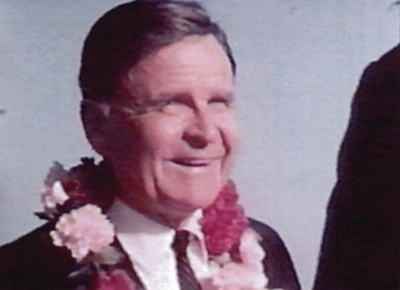
According to William Branham's cult rules, decorating ones body with false attachments was considering to be a "sin" by God. Cult members were forbidden to wear false teeth,[1] to dye their hair from its original color to a different color,[2] and more. Especially for women, cult rules strictly forbade "false things". Branham, however, suffered from male pattern baldness, and a wig was mysteriously missing from the "false attachments" rule.

The Eighty Percent Doomsday Prediction
Religious conmen, often boasting the most ridiculous and exaggerated claims, frequently point unsuspecting listeners to statistics of their own invention. The casual listener, not engaging in critical thought, will willingly accept these "statistics" as fact without verifying them, and then help spread false truths. William Branham, who used religious conman John Alexander Dowie as his prototype, was no exception to this rule.
1953 Voice of Healing Convention
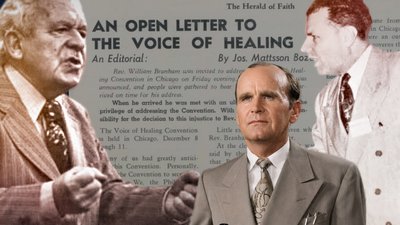
The 1953-1955 rupture between William Branham and The Voice of Healing marked a major turning point in the postwar healing revival, as Ern Baxter, Gordon Lindsay, and other revival leaders distanced themselves from Branham over doctrinal concerns, while Joseph Mattsson-Boze and the Latter Rain wing defended him, promoted him through The Herald of Faith, and rebuilt his influence through a new fellowship of sympathetic ministers; into this realignment came Jim Jones, who by 1955 was being publicly promoted by Boze as a gifted healing and discernment minister within the Herald of Faith network, placing Peoples Temple inside the same Branham-aligned, Latter Rain revival stream that emerged after Branham's rejection by the Voice of Healing establishment.

William Branham’s Israel Prophecy and the Problem of Failed Revelation
In the early 1960s, William Branham claimed that Israel—and later entire nations such as France—would be converted through his “Message,” a claim that directly contradicted biblical teaching and never materialized before his death. After his fatal accident in 1965, movement leaders postponed his burial and promoted resurrection expectations, reframing failed prophecy as unfinished work rather than error.
Marvin
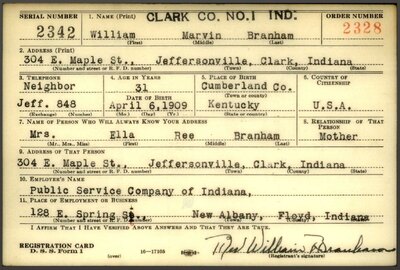
William Branham's legal name, according to his 1940 draft card for the United States Defense Security Service, is "William Marvin Branham".[1] This government document is the only official document yet identified containing the full spelling of William Branham's middle name, which differs from the name used in some versions of William Branham's stage persona. On most government documents, William Branham's name is listed as simply, "William M. Branham". As early as March of 1963, William Branham began claiming that his full name was "William Marrion Branham".
When Discernment Never Fails—Until It Does
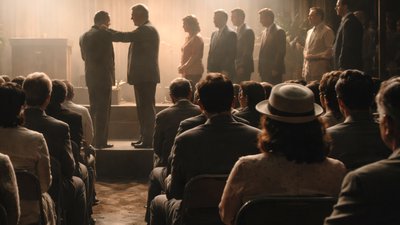
William Branham repeatedly claimed that his discernment was perfect, unfailing, and divinely guaranteed, yet his own sermons preserve moments of uncertainty, misidentification, and correction. By comparing these claims with documented prayer-line failures and the biblical standard for discernment, the historical record reveals a doctrine insulated from testing rather than confirmed by it.
Women Preachers
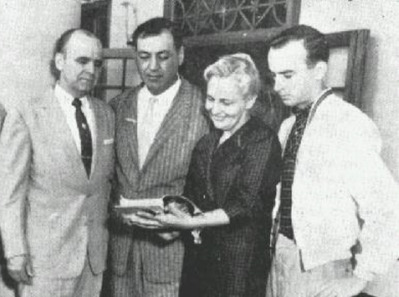
In some versions of his stage persona, William Branham opposed women taking an active role in the church. Those versions of the stage persona preached very strongly against female ministers but also preached against women participating in spiritual gifts. According to Branham in those instances, women should be "in the kitchen" instead of participating in the worship service.

Light Exposure
William Branham's "Message" cult members are manipulated into believing that light exposure before film development results in a "supernatural" photograph. While cult leaders have pushed this notion as part of the cult doctrine, many cult leaders were aware that the photographs were spoiled. In one sermon, cult leader Pearry Green admitted this fact:
When Angels Replace Christ: Branham’s Most Dangerous Doctrine
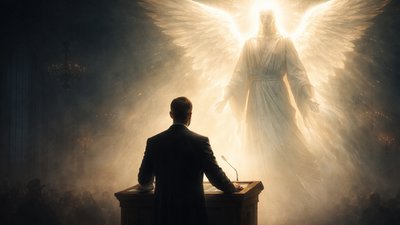
William Branham repeatedly taught that Christ was an angel—specifically Michael the Archangel—and structured his ministry around an angelic commission that functioned as a source of authority and validation. This examination traces how Branham’s angel-centered theology departed from historic Christian doctrine, blurred the distinction between Christ and created beings, and reshaped worship, revelation, and authority in ways incompatible with biblical Christianity.

Cancer, Fear, and Faith: William Branham’s Teachings Examined
This study examines how cancer is medically defined and understood in modern oncology, and contrasts that framework with William Branham’s teachings that framed cancer as the result of minor injuries, fear, or demonic influence. It explores how such claims exploited widespread fear of cancer, distorted Christian theology, and produced lasting psychological and pastoral harm among followers.
Raised A Man From The Dead
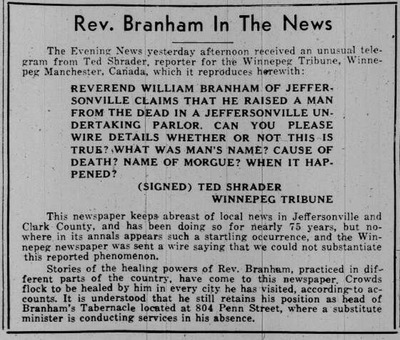
William Branham frequently claimed in his healing revivals that he had raised people from the dead and that these miracles were supported by verifiable, "bona-fide" statements, but newspaper investigations found that at least one major claim collapsed under scrutiny: when Branham told Canadian audiences that he had raised a man from the dead in a Jeffersonville undertaking parlor, reporters contacted the Jeffersonville Evening News, whose staff found no record of such a sensational event and traced the story instead to Elijah Perry, a sick railroad worker whom Branham himself had apparently pronounced dead without a physician present, revealing how Branham's stage persona transformed an unverified private prayer episode into a public resurrection claim.
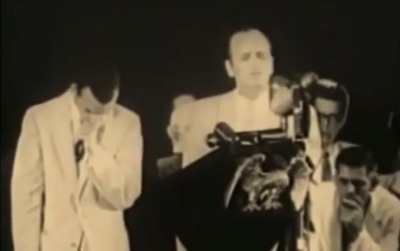
Prayer Lines
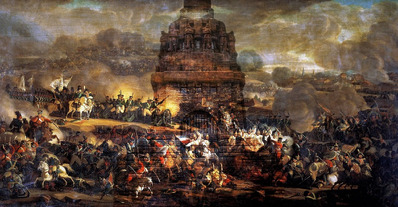
No Flesh Saved

Lose Your Soul With Mine
William Branham was aware of the Bible's warnings about false prophets and those with itching ears who choose to listen to them. For most Christians familiar with the Bible, it is a choice between spiritual life or death. Branham warned his followers that their souls were now spiritually bound to his; if he was a false prophet, their souls would be lost and in danger of hell fire.
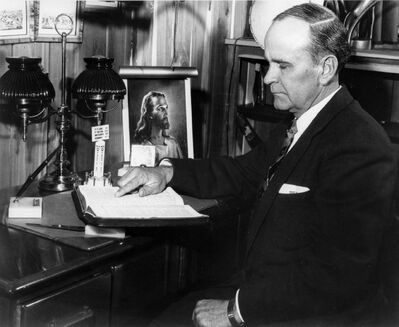
Two Major Prophets
After the Latter Rain Five-Fold Ministry had produced numerous "prophets", many of which joined William Branham's Voice of Healing Revival, [1] William Branham introduced his "two major prophet" doctrine, strongly associated with his Church Age theology. According to the doctrine, God only allowed one "major" prophet per "age", and there were no examples of two "major" prophets in the Bible. This was also strongly associated with his Manifested Sons of God theology. According to William Branham, the "Elijah prophet" of the last "age" - which he claimed to be [2] - was the full manifestation of Jesus Christ:

Kentucky Childhood
In some versions of his stage persona, William Branham claimed to have lived a Huckleberry Finn lifestyle in the hills of Kentucky,[1] fishing and trapping to provide for his widowed mother and siblings. Branham claimed that this was the reason that he was not aware of the widely popular Congressman William D. Upshaw,[2] who posed as a wheelchair invalid[3] in his healing revivals. Upshaw, who had been very mobile before his alleged "healing" became a fundamental part of Branham's revival tours, and spoke during some of the meetings.[4]
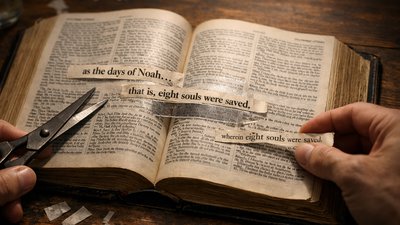
Born Liars? How Scripture Was Rewritten in Branham’s Teaching
William Branham publicly rejected creeds while elevating select composite phrases to doctrinal authority, reframing disagreement as resistance to Scripture itself. By adding, removing, or merging words across passages, these teachings subtly but decisively altered biblical meaning and centralized interpretive control.
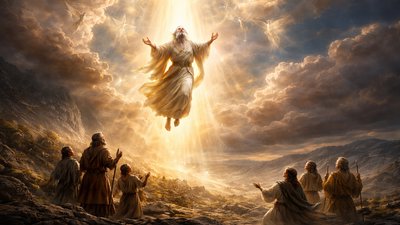
William Branham’s Enoch Doctrine and the Invention of a Pre-Tribulation Bride
William Branham’s teaching on Enoch departs sharply from the biblical text by extending Enoch’s lifespan, redefining his role, and elevating him as the controlling type for a pre-tribulation rapture doctrine. These claims align closely with Enochic pseudepigrapha, pyramidology, and esoteric speculation, revealing an extra-biblical framework that reshapes authority, ecclesiology, and eschatology.
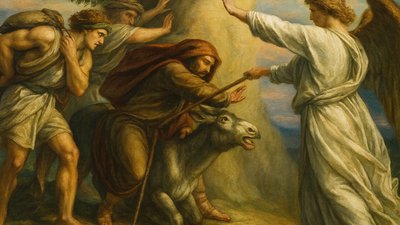
From Balaam to the New Apostolic Reformation: The Normalization of Prophetic Error
William Branham repeatedly used Balaam as a theological model to argue that genuine prophetic anointing and supernatural accuracy can coexist with doctrinal error, moral compromise, and destructive teaching, a framework he applied to the Latter Rain, the postwar Healing Revival, and later Charismatic and NAR movements. While this Balaam typology allowed Branham to critique revival excesses without denying supernatural experience, it also reshaped the biblical narrative in ways that insulated prophetic authority from accountability and helped normalize permissive theology under the language of unity, gifting, and success.
No records found.