
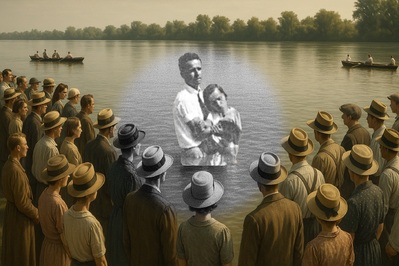
1933 Baptism: The Voice No One Heard
Dismantling William Branham’s famed 1933 Ohio River baptism story—showing that claims of a visible light, an audible commissioning voice, massive crowds, and nationwide newspaper coverage are contradicted by eyewitnesses, contemporary press records, and the documented history of his church and mentor, Roy E. Davis. It argues that the baptism narrative and the so-called 1933 prophecies were retrofitted into Branham’s biography as tools of authority, illustrating how myth-making and repetition, rather than verifiable evidence, became the foundation for prophetic belief in the Message movement.

1933 Prophecy of the Isms: Branham’s Changing End-Time Vision
William Branham did not publicly mention his supposed 1933 visions until 1953, when he claimed to have prophesied that Communism, Fascism, and Nazism would merge into a single system that would dominate the world and burn the Vatican—a narrative that closely echoes earlier fundamentalist apocalyptic literature and is flatly contradicted by subsequent history. As Communism failed to conquer Europe and eventually collapsed, Branham quietly revised his message, recasting Roman Catholicism rather than Communism as the final world power, presenting this reversal not as a correction of failed prophecy but as further divine revelation.

1907: Branham's Actual Birth Year
William Branham’s widely repeated 1909 birth year is a historically inaccurate date that emerged from his later sermons and theological self-mythologizing rather than from any legal documentation. Contemporary records—including multiple census entries, newspaper accounts, and early public documents—consistently demonstrate that he was born in 1907, a fact overshadowed over time by the prophetic significance Branham attached to the later date.

From Branham's Healing Revival to Armed Cult: The Dark Legacy of Colonia Dignidad
Colonia Dignidad was not an isolated aberration but the product of apocalyptic fear, authoritarian control, and religious absolutism exported through William Branham’s Message movement. By tracing the shared roots connecting Branham, Jim Jones, and Paul Schäfer, the narrative shows how prophetic claims and revivalist rhetoric became tools for psychological domination, abuse, and violence.
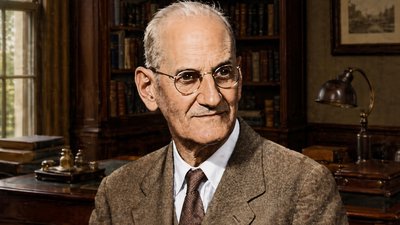
Howard Rand
Howard Benjamin Rand was an attorney, Prohibition Party figure, founder of the Anglo-Saxon Federation of America, and one of the most important American organizers of British Israelism, blending pyramidology, prophecy, racialized identity, anti-Roosevelt politics, antisemitic propaganda, and claims that Anglo-Saxons descended from biblical Israel into a system that helped move British Israel teaching toward Christian Identity; through figures such as William J. Cameron, Gerald Winrod, Gordon Lindsay, and later William Branham's Serpent's Seed theology, Rand's network became part of the ideological background connecting fundamentalist politics, white supremacy, Latter Rain revivalism, and later Pentecostal and charismatic restorationist movements.

Axl Rose and the Latter Rain: Childhood Trauma in a Postwar Pentecostal Subculture
Axl Rose’s formative years in an Indiana Pentecostal church shaped by the Latter Rain movement and William Branham’s “Message” cult exposed him to severe physical, emotional, and sexual abuse under a rigid, authoritarian form of religiosity. That traumatic religious environment left enduring psychological scars that fueled his rejection of organized religion and profoundly influenced his artistic identity, themes, and lyrics.

William Draves
William Draves founded the Church of Christ with the Elijah Message, a Latter Day Saint splinter group in Independence, Missouri, after claiming that John the Baptist appeared to him as a messenger of the Lord and delivered a series of instructions for the church. One of Draves' alleged revelations named a "William Branham" among men to be set apart as elders, and William Branham later used this reference to imply that Draves' prophecy had supernaturally identified him, even calling it "Thus Saith The Lord." Branham also connected Draves' revelations to his own prophecy traditions by claiming that the same source predicted Nazism in Germany, turning a marginal Latter Day Saint splinter prophecy into another piece of supporting mythology for Branham's prophetic stage persona.

Antonio Montella: The Mobster, the Message, and the YouTube Video That Exposed It All
Italian authorities captured fugitive mob figure Antonio Montella after discovering a YouTube video showing his baptism into the William Branham “Message” movement, which provided investigators with enough geographic and contextual clues to locate his hiding place. His arrest unfolded amid a major ‘Ndrangheta drug-trafficking crackdown, highlighting an unusual intersection between organized crime and a controversial religious sect.
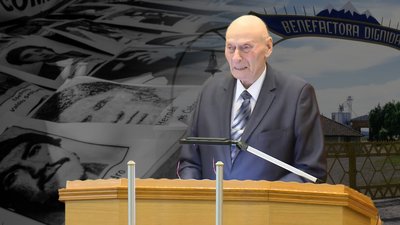
Ewald Frank and the German Expansion of William Branham’s Message
Ewald Frank emerged as the central German leader of William Branham’s Message movement, founding Freie Volksmission and modeling his authority on Branham’s prophetic claims. His career has been marked by controversy, including allegations of moral misconduct, claimed supernatural experiences, and documented associations with Colonia Dignidad and its international fallout.
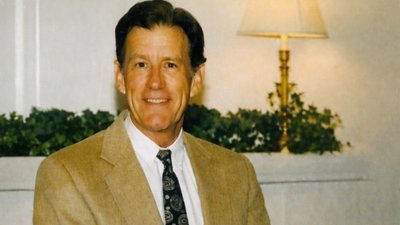
Floyd Patterson and the Business Architecture of William Branham’s Message
Floyd W. Patterson Jr. functioned as a key local custodian of William Branham’s Message by combining pastoral leadership with extensive commercial operations in northern Arizona. Public records show how business ownership, corporate governance, and civic visibility reinforced a personalized authority structure that sustained Branham’s cult-of-personality after his death.
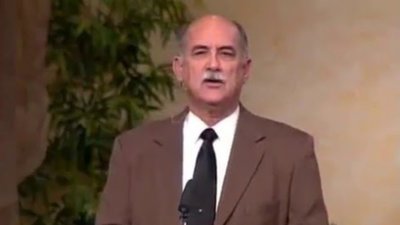
George Smith: Defender of the Undefendable
George Smith, son-in-law to William Branham, emerged as one of the most influential yet overlooked architects of the Message movement’s posthumous theology, transforming unresolved contradictions into institutionalized mystery. Through editorial control, narrative harmonization, and eventually metaphysical explanations that defied history itself, Smith helped construct a belief system designed not for coherence, but for survival against scrutiny.
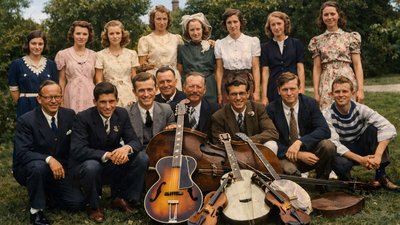
Frank Broy: Court Records, Family Conflict, and William Branham’s Father-in-Law
Frank Broy was William Branham’s father-in-law and a recurring figure in both early twentieth-century court records and Branham’s later sermon narratives. Contemporary newspapers document Broy’s legal troubles and public incidents, while Branham’s sermons recast him as a familiar family presence during moments of personal tragedy.
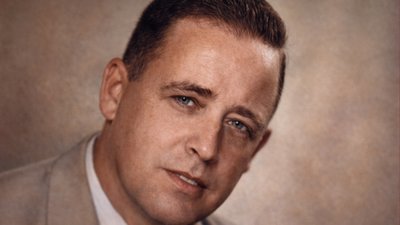
Estle Beeler: The Trusted Evangelist Inside William Branham’s Inner Circle
Estle Beeler functioned as an evangelist, pastor, and trusted associate within William Branham’s Message movement, with his authority consistently framed through Branham’s public endorsements and doctrinal alignment. Contemporary sermons and later historical synthesis show Beeler’s ministerial identity was shaped by proximity, loyalty, and integration into Branham’s inner ministerial network rather than independent leadership.

Berniece Hicks: Branham’s Sunday School “Messenger” and the Rise of Christ Gospel Church International
Berniece Hicks emerged from William Branham’s inner circle—teaching in his tabernacle, participating in early revival networks, and adopting the same “Message”-adjacent doctrines and source-material claims—before building Christ Gospel Church International into an isolationist movement centered on her own prophetic authority. Over time, her teachings expanded into militant Manifest Sons/“Joel’s Army” themes, increasingly extraordinary supernatural claims, and accusations from former members that drew public scrutiny, including a 1979 Louisville Courier-Journal investigation.

The Branham Peaks "Mystery" Explained: Names, Myths, and the Record
Some "Message" believers treat the Branham Peaks near Branham Lakes, southeast of Butte, Montana, as a pilgrimage site and connect the place name to William Branham's claim about seeing seven peaks that matched the seven letters of his stage name. Historical naming and local accounts point instead to ordinary regional history tied to early miner Tom Branham and related place names, with later movement folklore amplified by a 1970 newspaper inquiry that framed the matter as a "mystery."

Branhamism Explained: Theology, Authority, and the Cult of the Messenger
Branhamism refers to the network of movements shaped by William Branham’s late-stage teachings, emphasizing exclusive revelation, distinctive doctrines such as Serpent’s Seed, and the identification of the “Message” with the messenger himself. Because Branham’s theology shifted over time and was selectively preserved by competing sects, scholars continue to describe the system as internally inconsistent and difficult to define.
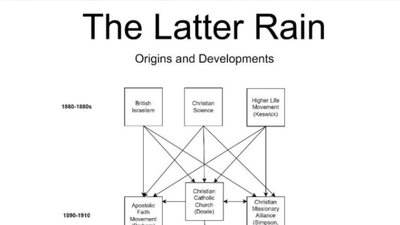
The Latter Rain Origins and Developments
The Latter Rain: Origins and Developments presents a simplified historical map of the religious movements, ministries, and organizations connected to or influenced by the Latter Rain Movement. It traces earlier roots through British Israelism, Christian Science, the Higher Life/Keswick tradition, John Alexander Dowie, Charles Parham, and the Christian and Missionary Alliance, then shows their influence on Pentecostalism and major Pentecostal denominations. From there, the chart places the Latter Rain Movement alongside the postwar Healing Revival and maps its later connections to Full Gospel Business Men’s Fellowship, William Branham’s Message movement, Voice of Healing, Word of Faith, prosperity teaching, the Shepherding Movement, Christian Identity groups, People’s Temple, Calvary Chapel, Vineyard, Bethel, and other charismatic, restorationist, and sectarian movements. The chart is not presented as a complete history, but as an overview of overlapping networks and lines of influence surrounding Latter Rain theology, Pentecostal revivalism, healing evangelism, and later apostolic-prophetic movements.
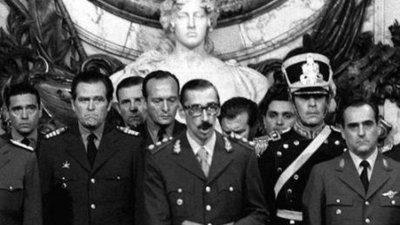
Operation Condor
Operation Condor was a U.S.-backed anti-communist intelligence and terror campaign formally organized by South American right-wing dictatorships in 1975, but the ideological groundwork described here reaches back into Cold War evangelical networks where political leaders such as Richard Nixon appealed to Full Gospel and healing-revival ministers to fight communism as a battle for the minds, hearts, and souls of people; within that environment, William Branham's ministry became a religious propaganda vehicle for anti-communist fear, doomsday prophecy, and global influence, while later Message-linked figures and networks connected to Chile, Colonia Dignidad, Paul Schafer, Gerhard Mertins, and right-wing operations show how Branhamite restorationism, anti-communist extremism, and authoritarian religious systems could overlap with international political violence.
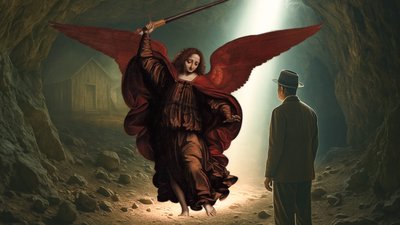
Vision, Angel, or Cave Encounter? The Unstable Origins of Branham’s Healing Ministry
William Branham’s shifting accounts of his alleged angelic visitation—alternating among a house, a cabin, and a cave—reveal a striking inconsistency in the foundational narrative of his prophetic authority. Over time, followers institutionalized the cave version, embedding it into “Message” folklore despite Branham’s own contradictory retellings.
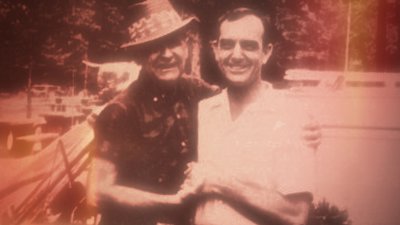
Drinking and Homosexuality: Moral Absolutes, Private Exceptions
William Branham’s Message enforced strict prohibitions against alcohol and homosexuality as markers of holiness and separation, yet historical records, testimony, and visual evidence reveal persistent exceptions within his inner circle. This investigation traces how authority, proximity, and institutional preservation consistently overrode the very moral standards imposed on followers.
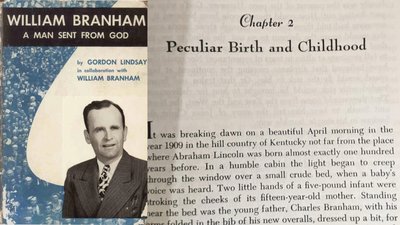
William Branham: A Man Sent From God?
William Branham’s 1950 biography A Man Sent From God was crafted to rebrand his persona as a “Moses-like” divine healer, standardizing a May 1946 angelic visitation as the moment he received a special healing gift and portraying his Jeffersonville church as wholeheartedly supportive. This version conflicts with earlier and later stories in which Branham claimed angelic encounters from childhood, described receiving his gift by a vision instead, and later even revised the book with extra supernatural elements like a “Pillar of Fire,” exposing major discrepancies in his “life story.”

1963 Mystery Cloud: Worship of the Missile
William Branham’s later claim that the 1963 Arizona cloud was formed by seven angels visiting him collapses under the documented timeline, since he was not in Arizona during the event and the cloud was confirmed by Vandenberg Air Force Base to have resulted from a military rocket detonation. Despite early reports and ongoing scientific publications identifying the cloud’s origin, Branham retroactively altered his story—changing five angels to seven, relocating himself beneath the cloud, and crafting a prophetic narrative that shifted dramatically over the following weeks.
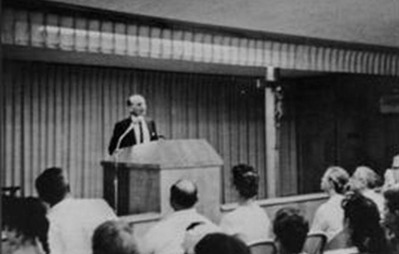
The Message
"The Message" is the name collectively used by members of William Branham's religious cult following to describe themselves. Other names are also used, including but not limited to, "End Time Message", "Bride", "Bride Church", "The Elect".
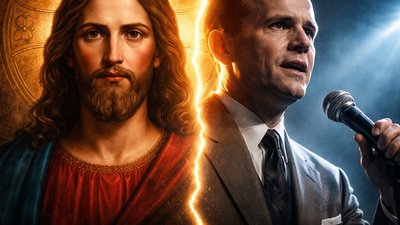
Christ Branham Theology: From Prophetic Language to a Replacement Christ
Christ Branham refers both to a post-Branham movement and to a theology that redefined how Christ was believed to be present in the last days. By examining William Branham’s own sermons alongside later leaders who interpreted his language literally, this study shows how prophetic implication hardened into a system that displaced Jesus Christ with an end-time messenger.
No records found.