
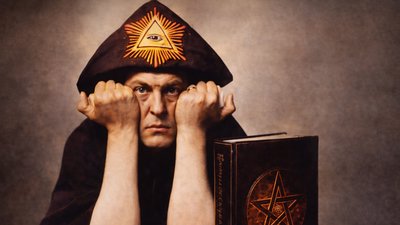
Aleister Crowley: From Thelema to Latter Rain
Aleister Crowley’s Thelemic teachings on celestial and “light” bodies, progressive revelation, and spirit communication significantly shaped Western esotericism, and many of these themes filtered—directly or indirectly—into the Latter Rain movement through figures like William Branham. Both Crowley and Branham drew on older occult and mystical concepts such as astral bodies, heavenly watchers, and angelic guidance, resulting in striking doctrinal parallels between Thelema and mid-century Pentecostal mysticism.
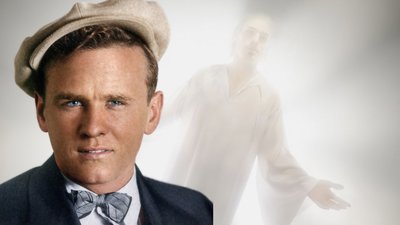
Angels, Mysticism, and Ministry: Reassessing William Branham’s Postwar Commission Narrative
William Branham’s post-1945 ministry increasingly relied on a supernatural “angel of the Lord” whose evolving identity, shifting chronology, and inconsistent role served to authenticate his healing revivals and prophetic authority. These developments stand in marked contrast to the biblical portrayal of angels as occasional messengers rather than ongoing spiritual partners, raising significant theological and historical questions about the legitimacy of Branham’s claims.

Chanting Mathematics: William Branham’s Trance Method and the Bible’s Warning
William Branham taught that chanting basic mathematical equations could draw believers into a trance and produce spiritual experiences he attributed to the Holy Spirit. Examined alongside biblical commands for sobriety, understanding, and discernment, this practice reflects trance-inducing mysticism rather than Christian prayer grounded in Scripture.
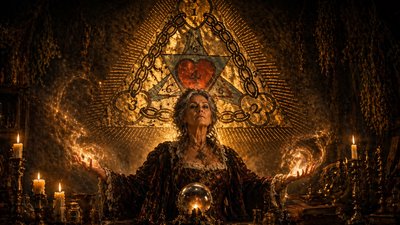
Jane Lead
Jane Ward Lead, also known as Jane Leade, was an English mystic and central figure in the Philadelphian Society whose visions, dreams, Behmenist theology, Sophia mysticism, universal restorationism, and teaching about a coming purified "Virgin-Church" deeply influenced later restorationist and Latter Rain streams; through her Sixty Propositions, her connection to the House of David tradition, and later use by figures such as George Hawtin, her ideas helped supply language for end-time overcomers, hidden revelation, manifest sons, spiritual elites, restored priesthood, miraculous power, and a perfected church that would become visible before Christ's return, themes later echoed in William Branham's theology and in destructive movements such as Peoples Temple and Colonia Dignidad.
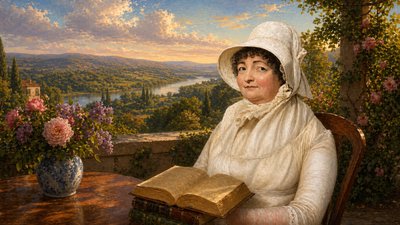
Joanna Southcott
Joanna Southcott was an English religious prophetess whose late eighteenth- and early nineteenth-century movement centered on visions, sealed prophecies, apocalyptic expectation, and the belief that she had a special role in God's end-time plan, including her claim late in life that she would give birth to a messianic child, making her one of the most striking examples of how prophetic authority, millenarian hope, symbolic revelation, and devoted followers can form a powerful religious movement around failed expectation.
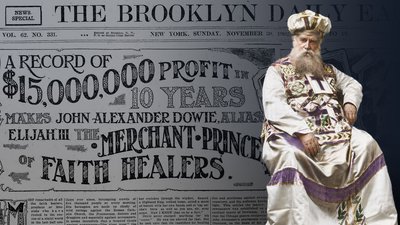
John Alexander Dowie
John Alexander Dowie was a late nineteenth- and early twentieth-century faith-healing evangelist, founder of Zion City, Illinois, and leader of a restorationist religious movement that emphasized divine healing, holiness, opposition to conventional medicine, apostolic authority, and the creation of a purified Christian community, making him an important forerunner to Pentecostal healing revival culture while also becoming a cautionary example of how charismatic authority, utopian ambition, financial control, and prophetic self-exaltation can produce authoritarian and unstable religious systems.
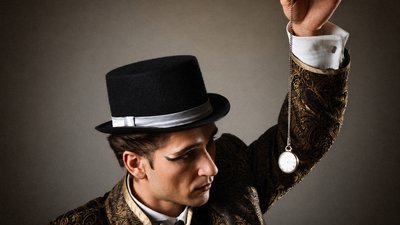
Psychokinesis
Psychokinesis, the claimed ability to move objects by mental power, normally belongs to occult, science-fiction, and horror categories rather than historic Christian teaching, yet it appeared in the early stage persona of William Branham during the Latter Rain era, when Branham connected extraordinary supernatural power with faith and reportedly attempted to teach revival leaders how to make objects move by belief; the surviving example of Branham challenging a woman to make a suspended bracelet move, stop, and change direction illustrates how his healing-revival message could blur biblical faith, occult-like power claims, spectacle, and the wider Latter Rain pursuit of extraordinary manifestations.
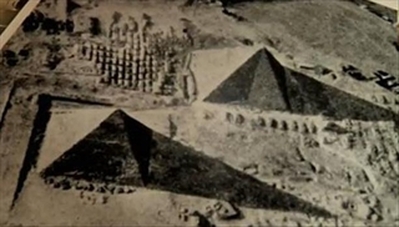
Pyramid
William Branham taught that the Great Pyramid of Giza was spiritually significant and perfectly mapped the years to his various doomsday predictions. The Gospel of the Pyramid was closely tied to his Zodiac teachings and was the foundation for Branham's version of rapture theology. Many additional doctrines were built on top of this foundation. It was not widely accepted, however, and Branham was careful to avoid teaching the doctrine when speaking to specific audiences. In some cases, Branham denied teaching it when certain people were present in his revivals or church services.[1] Other times, Branham claimed that the Great Pyramid of Giza and the Zodiac were the first and the second Bible.
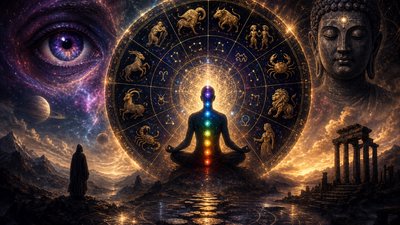
Zodiac
Mysticism in the New Apostolic Reformation often functions as a substitute for doctrine by elevating visions, dreams, signs, omens, angelic encounters, prophetic impressions, hidden revelation, and supernatural experiences into sources of authority, and William Branham became one of the movement's key models for this pattern by building his religious persona around "mystic lights," fortune-teller encounters, zodiac and pyramid "bibles," supernatural birth legends, and occult-like signs while presenting these claims as Christian truth; as a result, Branham's influence helped normalize a form of charismatic spirituality in which mystical experience can be treated as more compelling than Scripture, making it difficult for new believers to distinguish biblical Christianity from occult-adjacent revelation systems.
No records found.